
Artichokes
giant nettles/the crab legs of vegetables

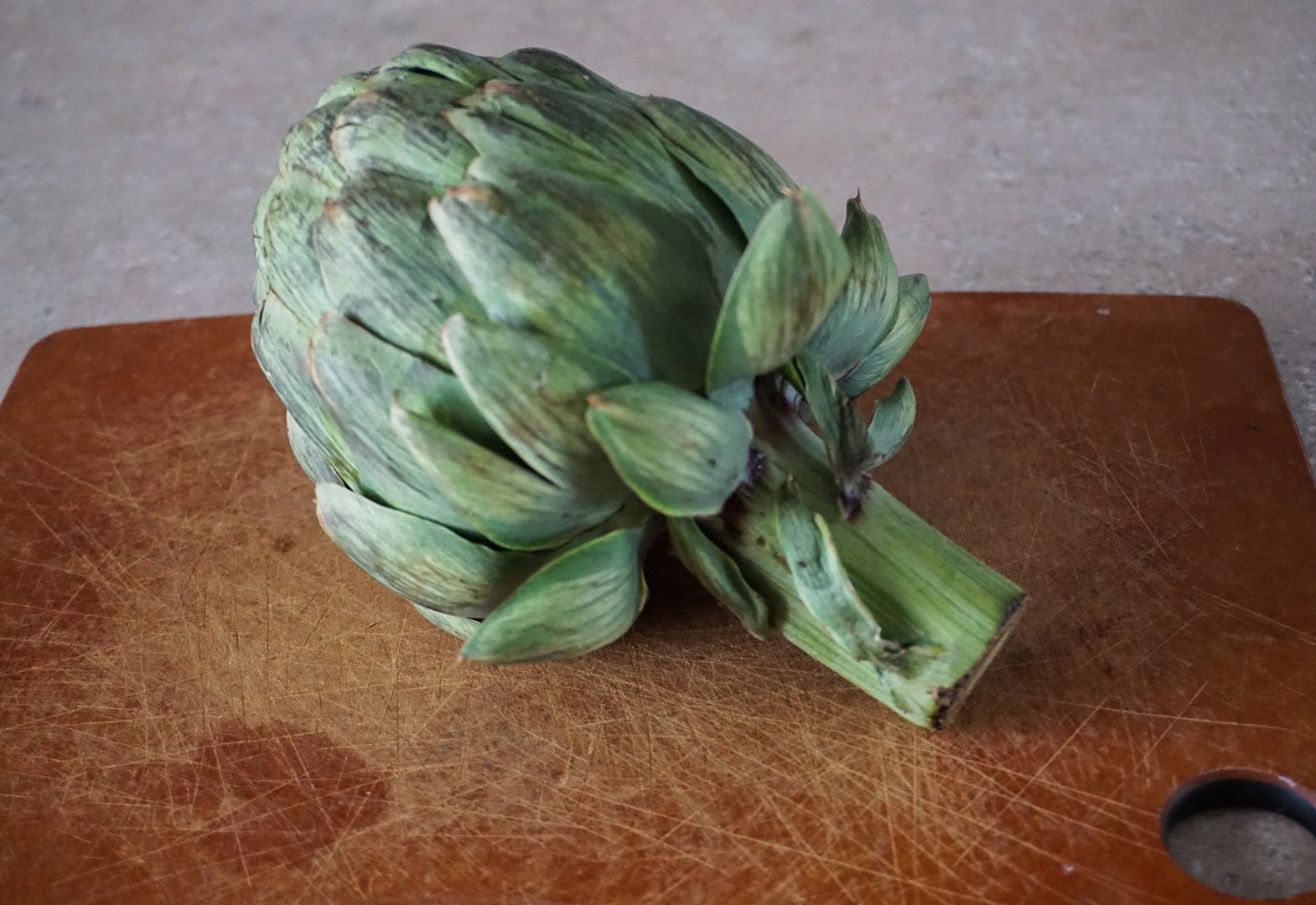
Artichokes are delicious in every form.
Even the cold kind that feels like an afterthought at a salad bar.
Or the mysterious canned kind that float in some sort of salt-y liquid that is part oil, part something else.
The best artichokes have been marinated in olive oil and spices, and the best way to eat them is roasted with green olives (try Callevestrano– thanks, Oat Bakery), served with sourdough or pasta, or in a leafy salad, a creamy dip, or even completely on their own.
Recently, though, the artichokes at the grocery store started talking to me, calling me a fraud for claiming to love artichokes without ever having gone through the process of preparing one myself.
You know, green-ish purple ones that usually wait patiently for the enlightened shopper to come along? On this particular day they were berating me.
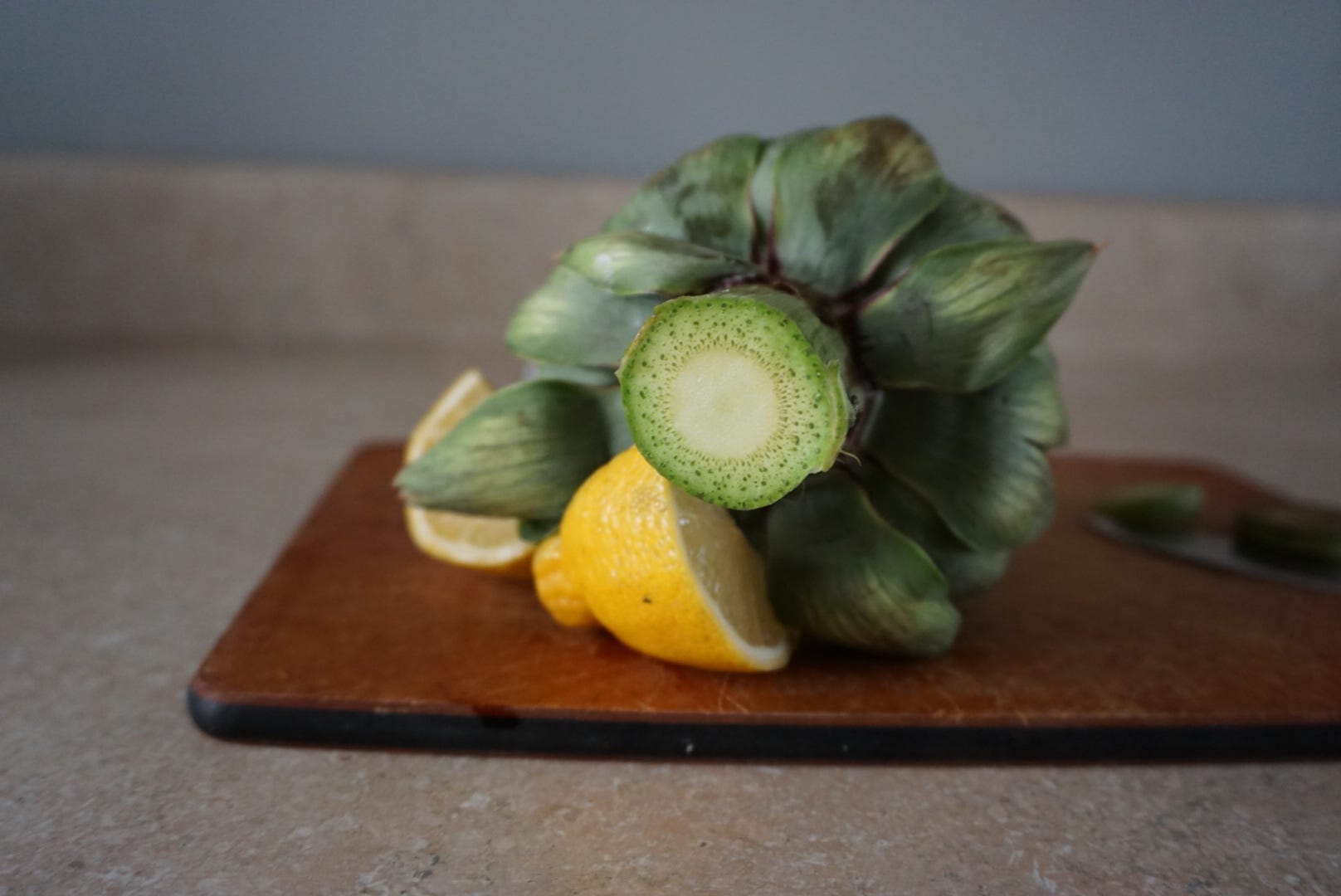
Or maybe I was berating me, and not the artichokes.
Artichokes are not desperate for attention.
They don’t rely on gimmicks or tricks.
They don’t try to entice you with cute packaging, and are not even necessarily easy to imagine into dinner because of their dinosaur-like exterior. They are completely secure in who they are, and they know that the people who matter to them understand.
I tried to convince myself that I didn’t need to go there (and by there I mean through the process of wrestling a whole globe artichoke into something edible).
I told myself that eating a fresh artichoke wouldn’t be exciting or delicious, and that eating it for lunch (dipped in olive oil, smothered in lemon) couldn’t possibly make me feel incredibly put together, superior, or enlightened.
But my creative whims one out and I decided to give it a try anyway.
And you know what? I did feel enlightened and superior and also like I was eating crab legs that were vegetarian friendly, and I would suggest that you give it a try.
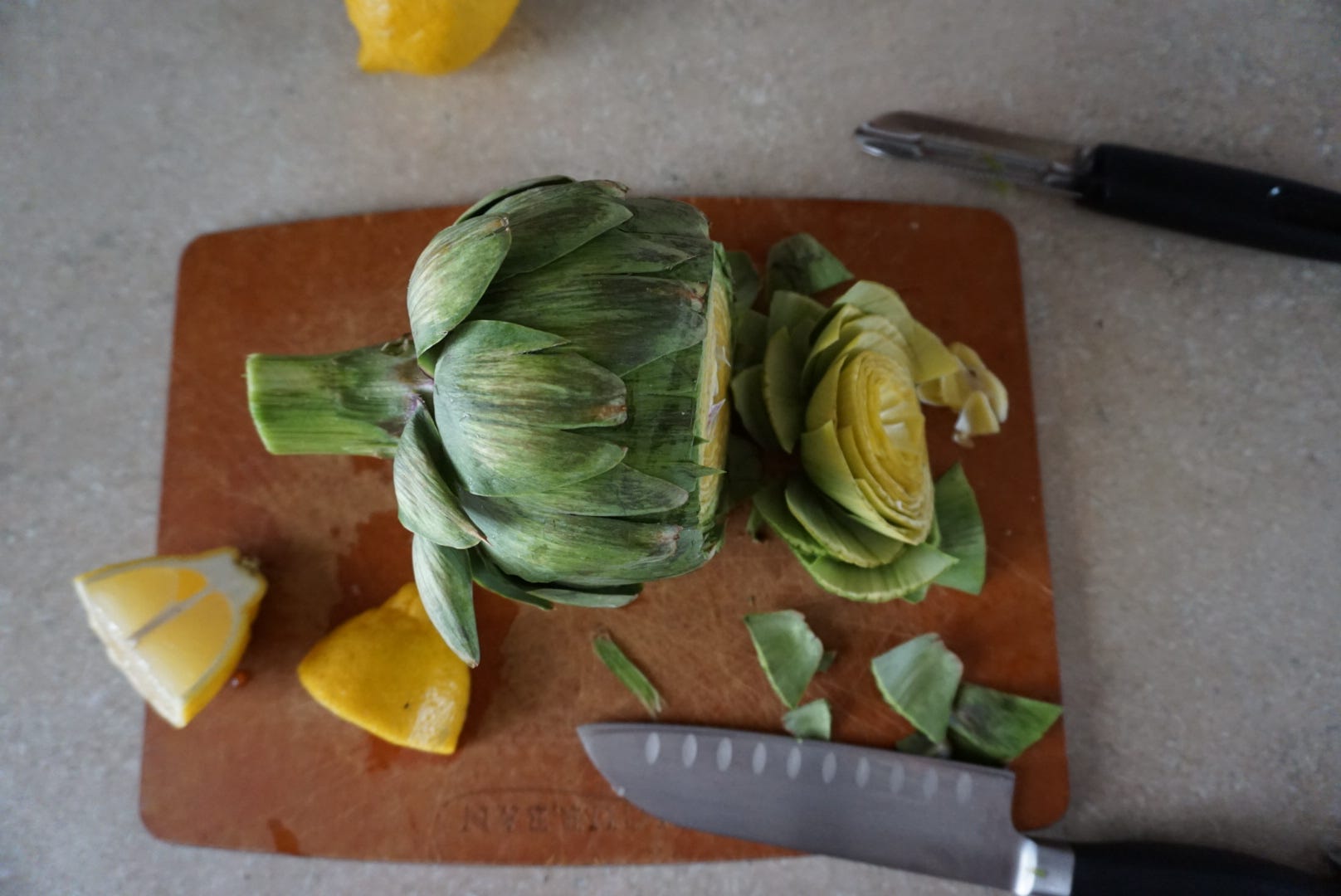
How to eat an artichoke that didn’t come in a jar or can:
Step one: Take your artichoke, remove the lowest leaves that are thorny (no one ever told me that artichokes are so spiky– guess what: they are actually one giant thistle, and offer the similar health benefits as milk thistle, best summarized here). Cut off the top 1/4 of the globe and about one inch off the stem.
Trim any remaining thistle-y tops of leaves with scissors (basically think: would I want to eat this part of the artichoke? If the answer is no, remove it.)
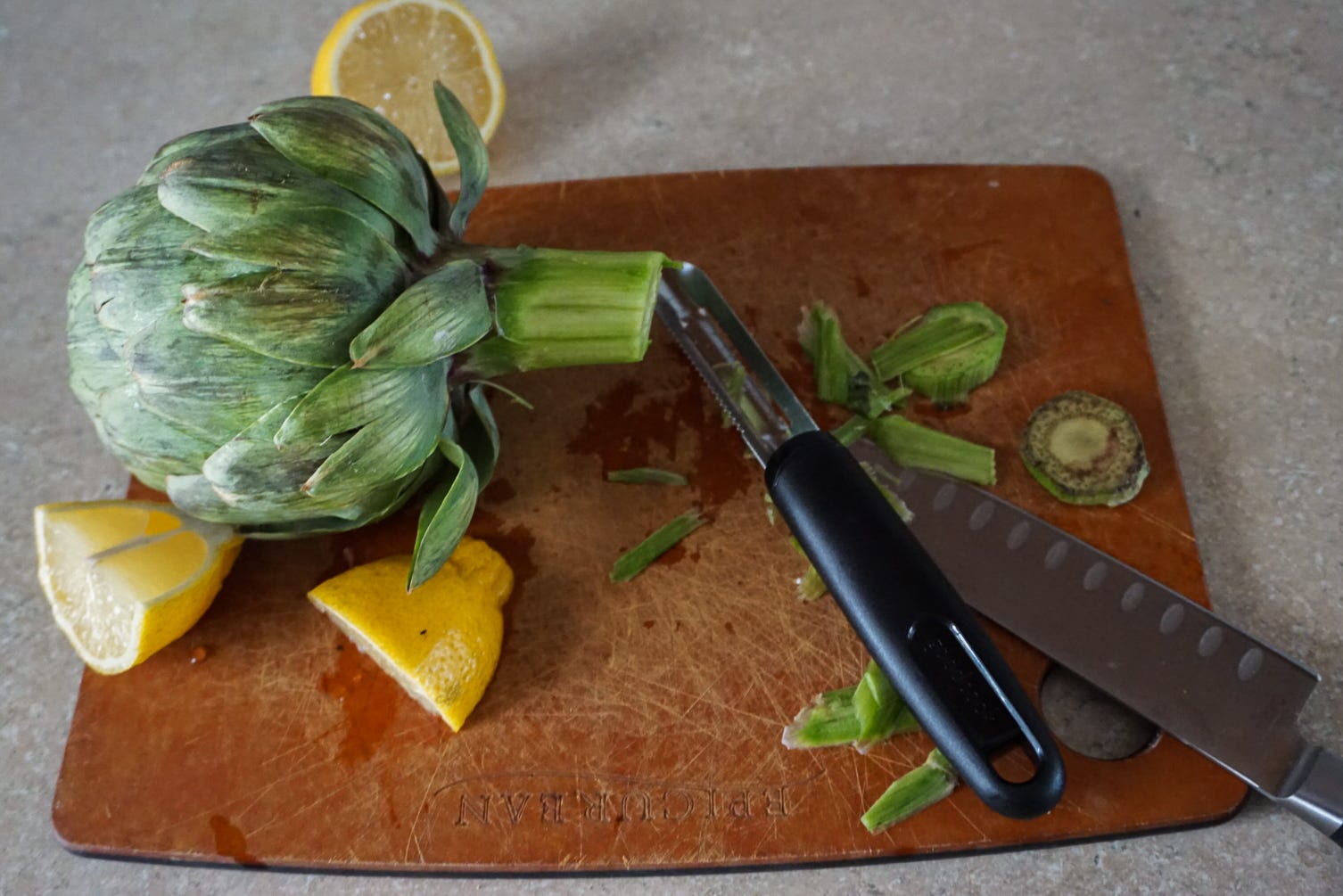
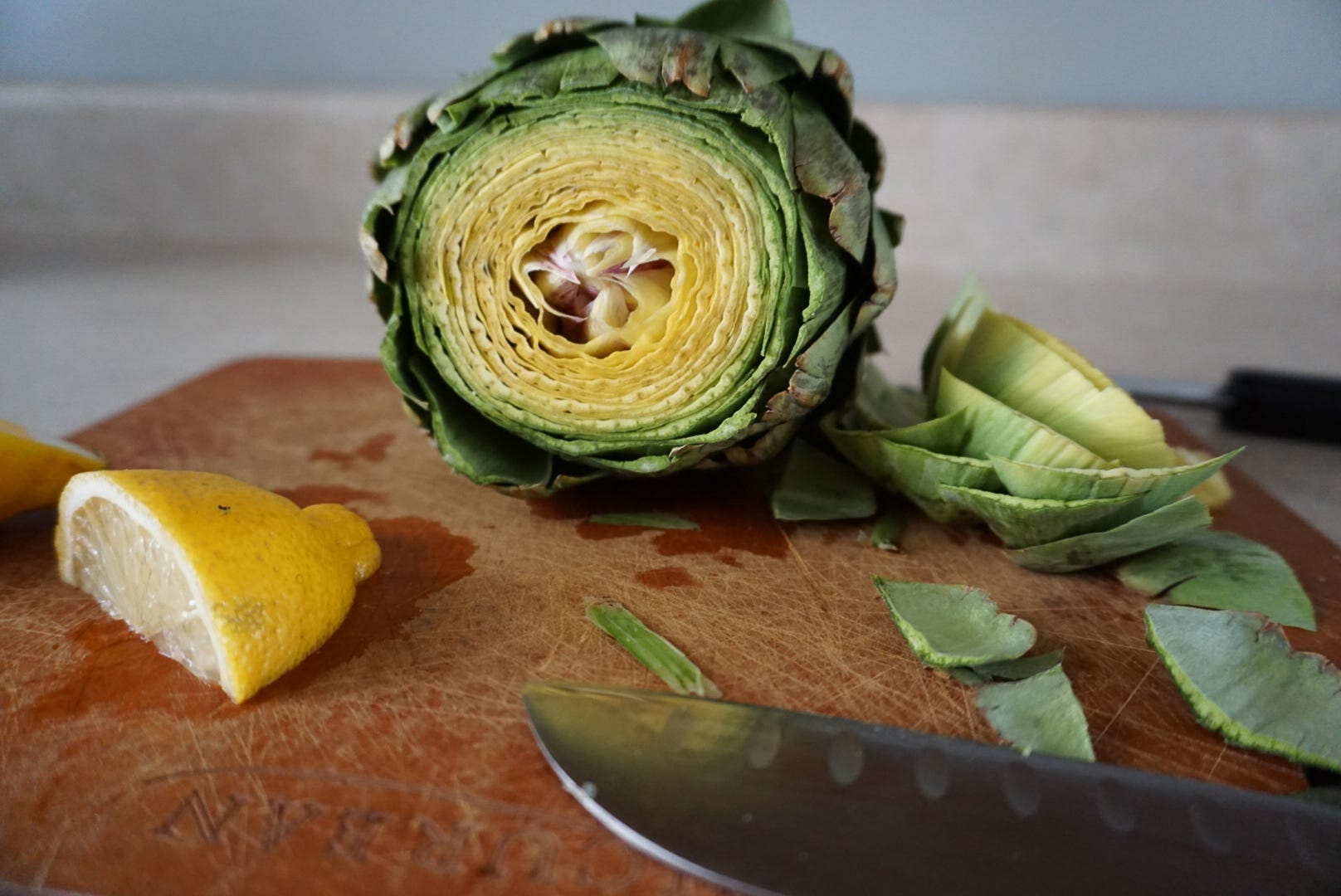
Step two: Take a peeler to the stem of the artichoke, then rub all exposed areas (the now-flat top of the globe where the cut was made and all over the stem) with lemon. This helps with flavor and prevents the artichoke from browning.
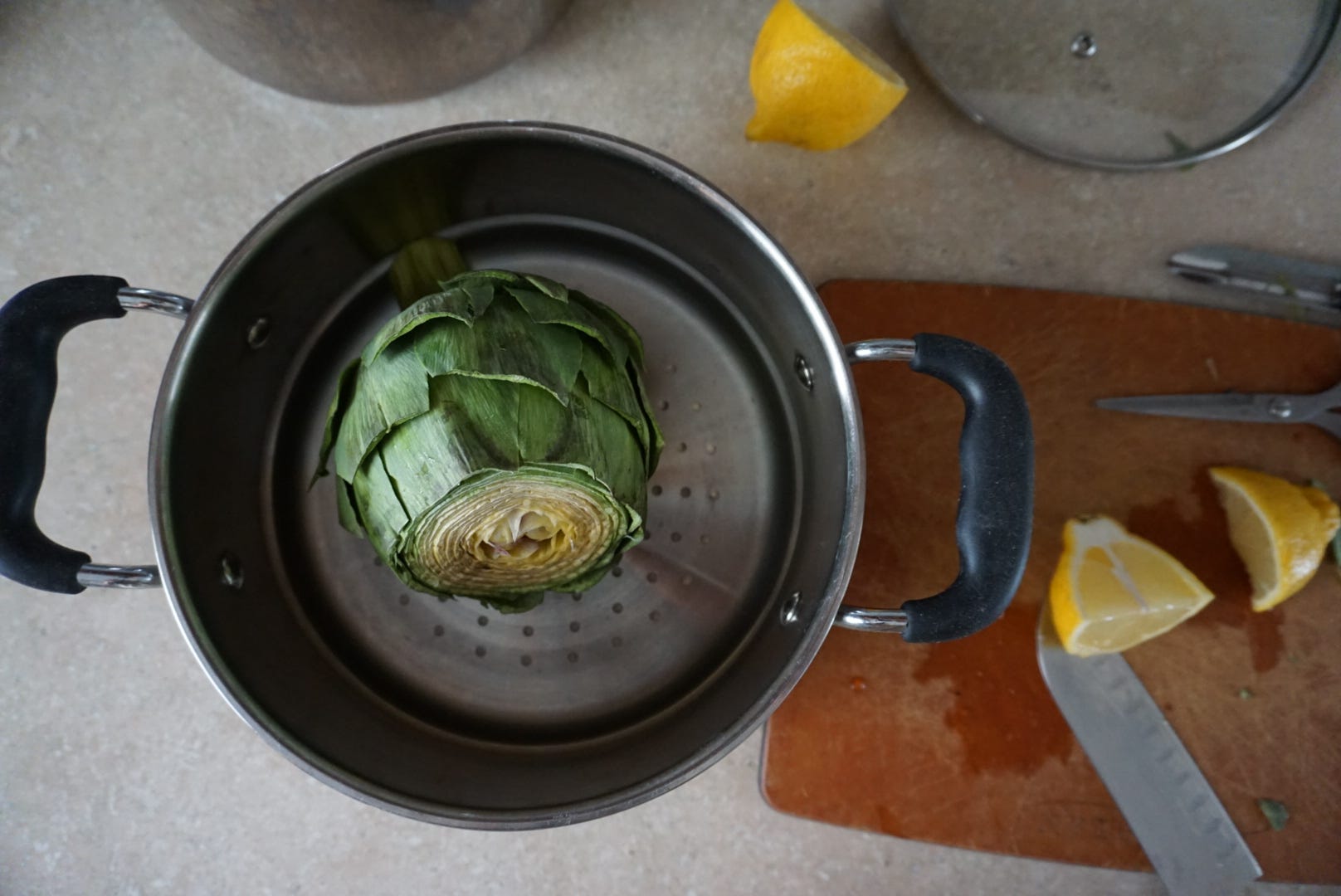
Step three: Fill a pot with water and the remaining lemon. Place whole artichoke in a steamer/ steam basket (a steam basket works kind of like a double boiler and you could honestly make do by putting a metal colander over a pot of boiling water). Place artichoke over boiling pot of water & lemon and steam for 35 min.
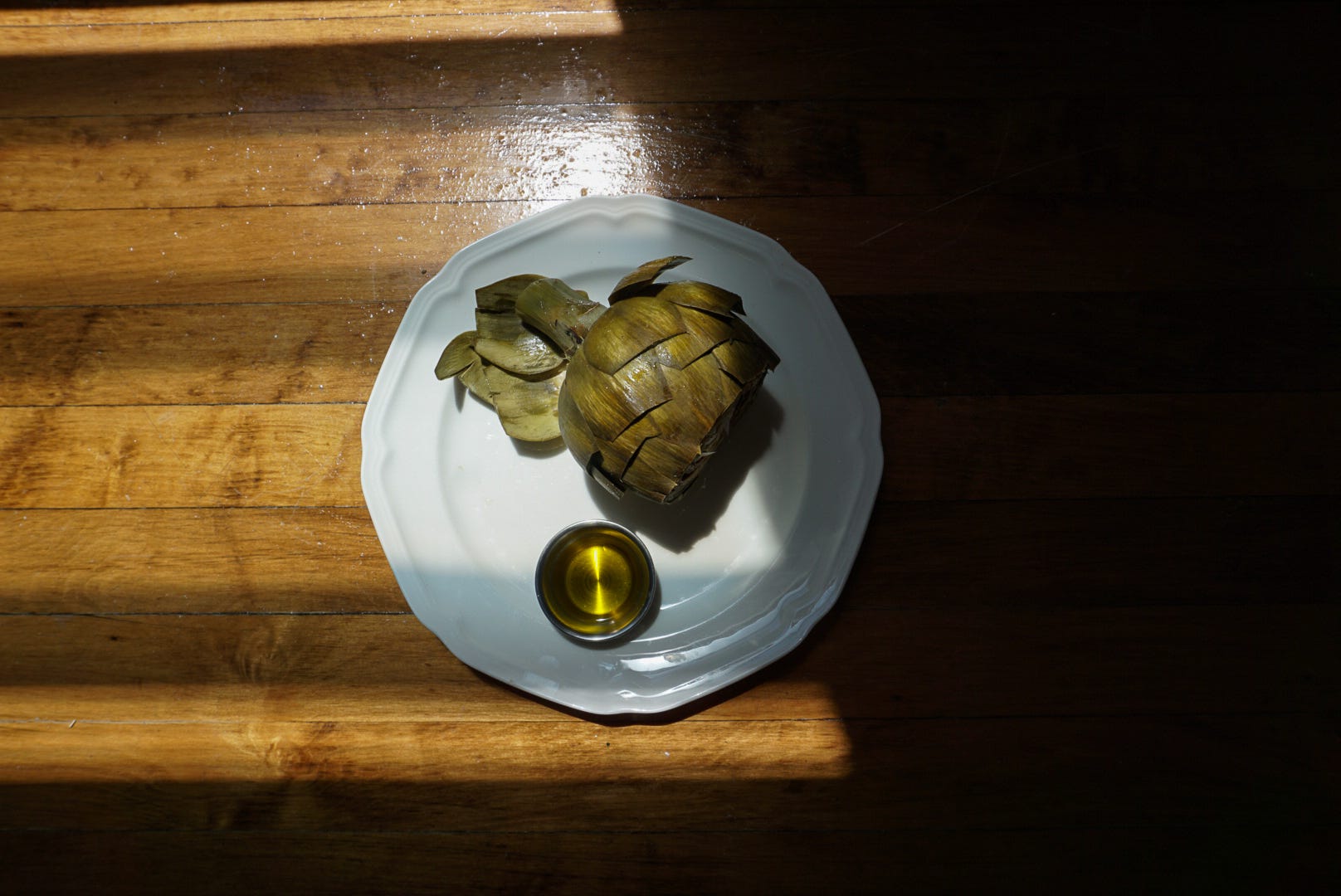
Step four: Enjoy.
Simply peel exterior leaves off of artichoke one by one and scrape the bottom fleshy part with your teeth. In my opinion, it’s best kept simple: sprinkle artichoke in flaky sea salt and dip leaves either in olive oil or lemon garlic butter. The leaves will get more and more tender as you get to the center of the artichoke. You will feel decidedly more European while eating your artichoke, though I’m not sure why.
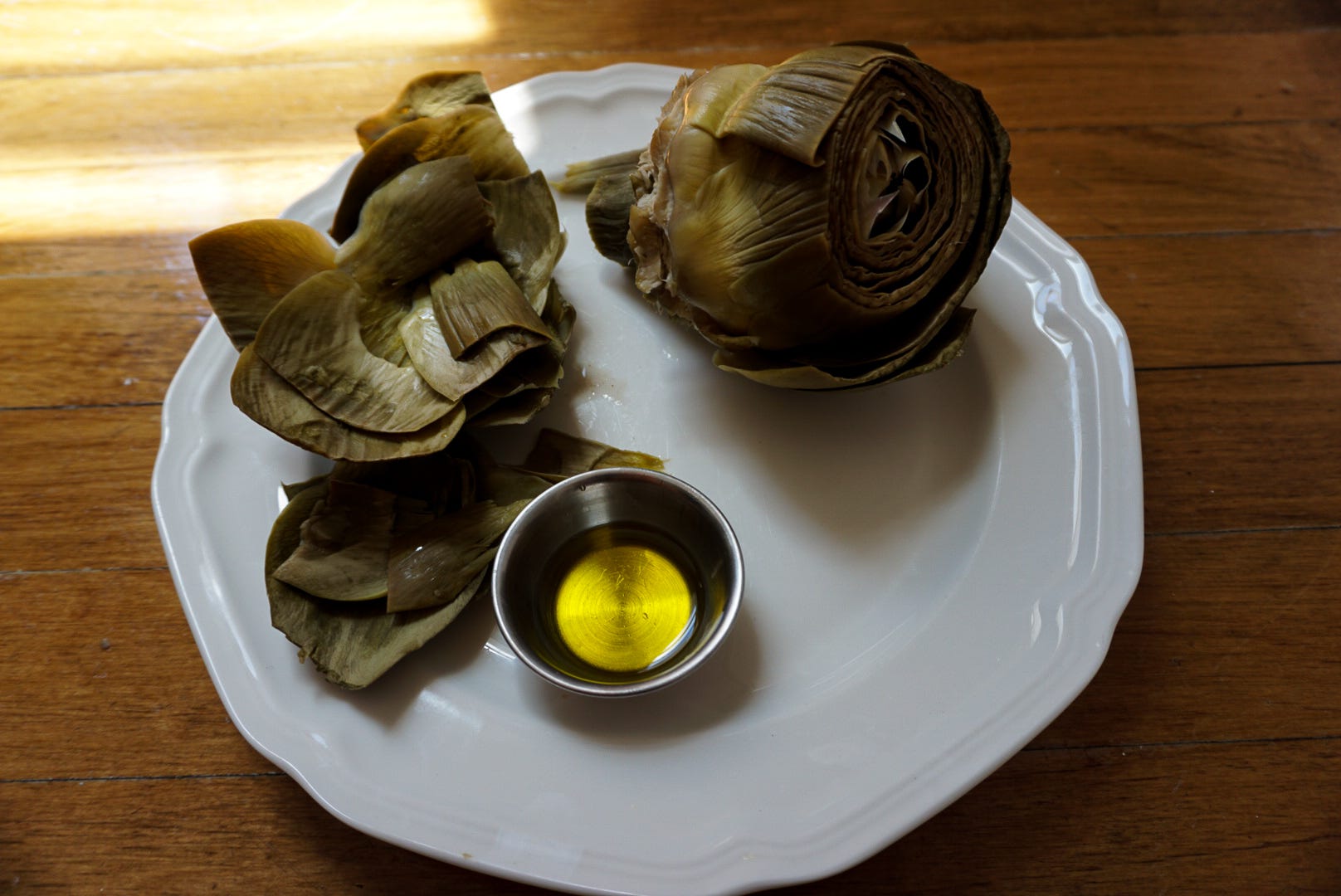
Step five: Eventually you will be left with the center “choke” of the artichoke, the heart, and the stem. Clean any bristle-y fuzzy bits and any fibrous leaves off the heart of the artichoke (use a knife or spoon to remove them). The heart and stem are two of the best parts to eat.